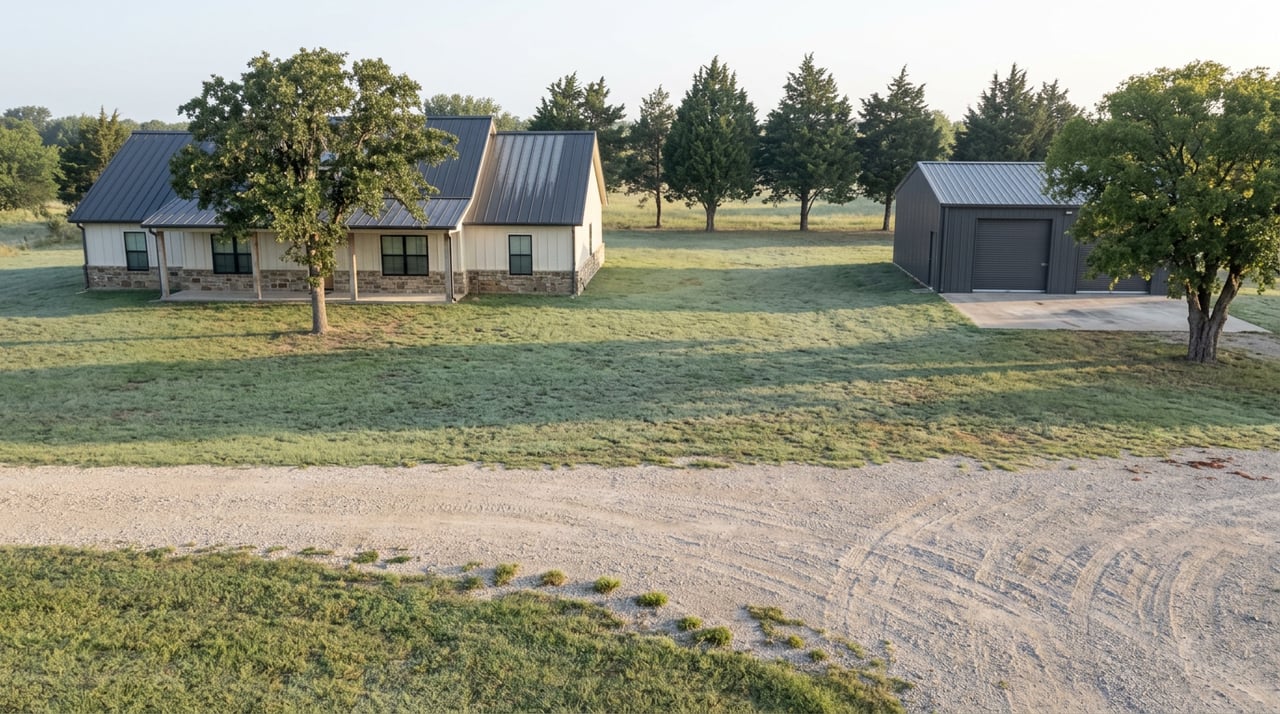
You found the house. Three bedrooms, a metal shop out back, enough acreage for the horses your kids have been asking about for two years. The listing says Blanchard, Oklahoma, and in your head that means the same water and sewer bill everyone else on your street pays. Then your loan officer asks a question your offer never mentioned: what loan program are you using, and does this property have a well and a septic tank.
That question decides more about your closing timeline than the price you negotiated.
An Address Doesn't Tell You Which Utility System You're Buying
Blanchard's city limits sit across two counties, McClain and Grady, with a wide ring of unincorporated acreage on either side of that line. A home with a Blanchard mailing address can sit inside the corporate limits, on city water and city sewer, or several miles outside them, on a private well and a septic tank the seller has never had tested. Nothing on a listing sheet tells you which one you're looking at. You find out by asking, or you find out during underwriting.
Inside the corporate limits, the city's own code of ordinances settles the question for you. Chapter 16 of Blanchard's code states it plainly:
Every residential inhabitant within the corporate limits of the city of Blanchard, Oklahoma, and every commercial or business entity or enterprise who may practically do so, shall secure all of its potable water requirements from the water system owned by said city and leased to the Blanchard Municipal Improvement Authority, connect to the sanitary sewer system owned by said city and leased to said authority, and not otherwise dispose of sewage, unless it is impossible or not feasible to do so.
That word "unless" is doing real work. Outside the line the city draws, private systems aren't an exception. They're the default. Blanchard's Public Works Department runs the water and sewer system with about ten full-time employees and two seasonal workers, and their responsibility ends at the edge of the corporate limits. Past that edge, you're relying on a well and a septic field, and the condition of both depends entirely on how the current owner has maintained them.
The Same House, Two Different Closings
Here's the part most buyers don't learn until they're already under contract: your loan program, not the property itself, decides how much scrutiny that well and septic system get.
A conventional loan through Fannie Mae or Freddie Mac is the most forgiving path. If nobody flags a problem, no separate well or septic inspection gets ordered. The appraiser looks, the lender moves on, and you close on the timeline you expected.
FHA and VA loans work differently. Both require a well and septic inspection every time, regardless of how the system looks from the driveway. USDA loans, common on the kind of acreage properties Blanchard is known for, are stricter still, requiring a water quality test on any property served by a well.
| Loan type | Well/septic inspection required? | Water quality test | Typical trigger for extra scrutiny |
|---|---|---|---|
| Conventional | Only if a hazard is flagged | Not standard | Appraiser or inspector notes a visible problem |
| FHA | Always | Required, valid 180 days | Automatic, regardless of visible condition |
| VA | Always | Required, valid 90 days | Automatic, regardless of visible condition |
| USDA | Always for well-served properties | Required | Automatic, rural development standards apply |
If you're comparing two Blanchard homes at the same price, one on city sewer inside the corporate limits and one on well and septic a few miles out, and you're financing with FHA or USDA, you're not comparing two identical closings. You're comparing one that proceeds on the appraiser's word and one that waits on a lab report and a distance survey.
The Numbers That Actually Decide Whether You Close On Time
FHA and USDA guidelines get specific in ways that matter once you're past the offer stage. The well casing needs to sit at least 10 feet from the property line. The septic tank needs to be at least 50 feet from the well. The drain field needs at least 100 feet of separation in most cases. And the well itself needs to produce a sustained flow of at least 3 gallons per minute, tested by running multiple fixtures at once.
That last number is the one that catches people off guard. A well can look fine, run clean, taste fine, and still fail a flow test if the aquifer underneath the property has always produced on the lower end. When that happens, the fix isn't a quick repair. It can mean negotiating who pays for a new well, a cost that historically has run into the tens of thousands of dollars with no guarantee the new well produces any better than the old one.
FHA water quality tests are good for 180 days. VA tests expire after 90. If your closing slips, and rural closings slip more often than in-town ones because of exactly this kind of testing, you may need to retest before the loan can fund.
Who Actually Does This Work Around Here
This isn't a hypothetical inspection industry. It's a handful of local companies who show up on the property with equipment.
Pitch2Grade, LLC, based right in Blanchard, is licensed by the state and specifically markets well, septic, and foundation inspections, with fees starting around $335 depending on the size and age of the home. Doc's Septic Tank Cleaning has served Oklahoma properties since 1993 and works on both traditional and aerobic septic systems. Wastewater Solutions, also based in Blanchard, handles septic pumping and repair for the area.
If you're the buyer, one of these companies, or one like them, is who your lender sends out. If you're the seller, they're who you call before you list, so the report your buyer's lender orders isn't the first time anyone has looked at your system in years.
What Sellers Can Do Before It Becomes a Problem
If your Blanchard property sits outside the corporate limits, the smart move is to treat the well and septic system the way you'd treat a roof or a foundation: get ahead of the inspection your buyer's lender is going to order anyway.
A septic system that's been pumped and inspected within the last one to three years, with paperwork to show for it, tells an FHA or USDA underwriter exactly what they need to hear. A well flow test done before you list means you find out about a marginal aquifer on your own schedule, not during someone else's loan underwriting. Neither costs much compared to what a failed test costs you in a renegotiated contract three weeks before closing.
FAQ
Does a conventional loan ever require a well or septic inspection in Blanchard? Only if something triggers it. If the appraiser, the home inspector, or another party in the transaction reports a visible problem, the lender is required to order an inspection before closing. Absent that, conventional financing doesn't mandate one.
How do I find out if a specific Blanchard address is inside the corporate limits? The city's public works and utilities departments can confirm whether a property address is connected to municipal water and sewer. This is worth checking before you write an offer, not after.
What happens if the well tests below 3 gallons per minute right before closing? The underwriter will typically require a repair or a documented solution before the loan can fund. Options range from adjusting the pump setup to, in more serious cases, drilling a new well, which is a cost and timeline conversation worth having with your lender and the seller early rather than late.
Are USDA loans a realistic option for rural Blanchard properties? USDA Rural Development loans are built for exactly this kind of property, but they carry some of the strictest water quality testing requirements of any loan type. Confirm eligibility and testing expectations with your lender before you fall in love with a specific acreage listing.
If you're comparing homes in Blanchard and you're not sure which side of the utility line a property sits on, or which loan program actually fits what you're buying, that's the kind of question worth asking before you write an offer, not after. Trey and Stephanie Real Estate knows this market inside the city limits and out past them. Give us a call.